MultiversX Reveals Google AP2 Integration
MultiversX Reveals Google AP2 Integration: Authorization Infrastructure for Agent Commerce
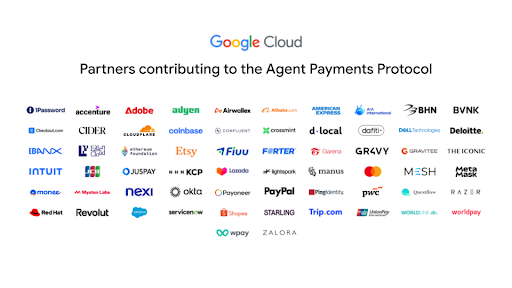
MultiversX now supports the Agent Payments Protocol (AP2), the open standard developed by Google with American Express, Mastercard, PayPal, Coinbase, Salesforce, and over 60 payment and technology organizations. AP2 provides the authorization and accountability layer required for agent commerce, sitting above the payment settlement rails the network already supports through x402, UCP, and ACP. This fills the authorization and accountability layer in MultiversX’s agent commerce stack, enabling agents to execute transactions with cryptographic proof of user authorization and clear accountability when something goes wrong.
What AP2 Does
AP2 solves a different problem than payment execution. When an AI agent makes a purchase, three questions arise that traditional payment systems cannot answer:
- Authorization: What proof exists that the user granted the agent authority for this specific purchase?
- Authenticity: How does a merchant verify the agent's request reflects actual user intent rather than unintended or unverified agent behavior?
- Accountability: If something goes wrong, who bears responsibility?
AP2 addresses these through Verifiable Digital Credentials (VDCs)—signed credentials exchanged between agents, merchants, and payment systems. These are cryptographically signed data structures that create an audit trail from initial user intent through final settlement.
The Three Mandate Types
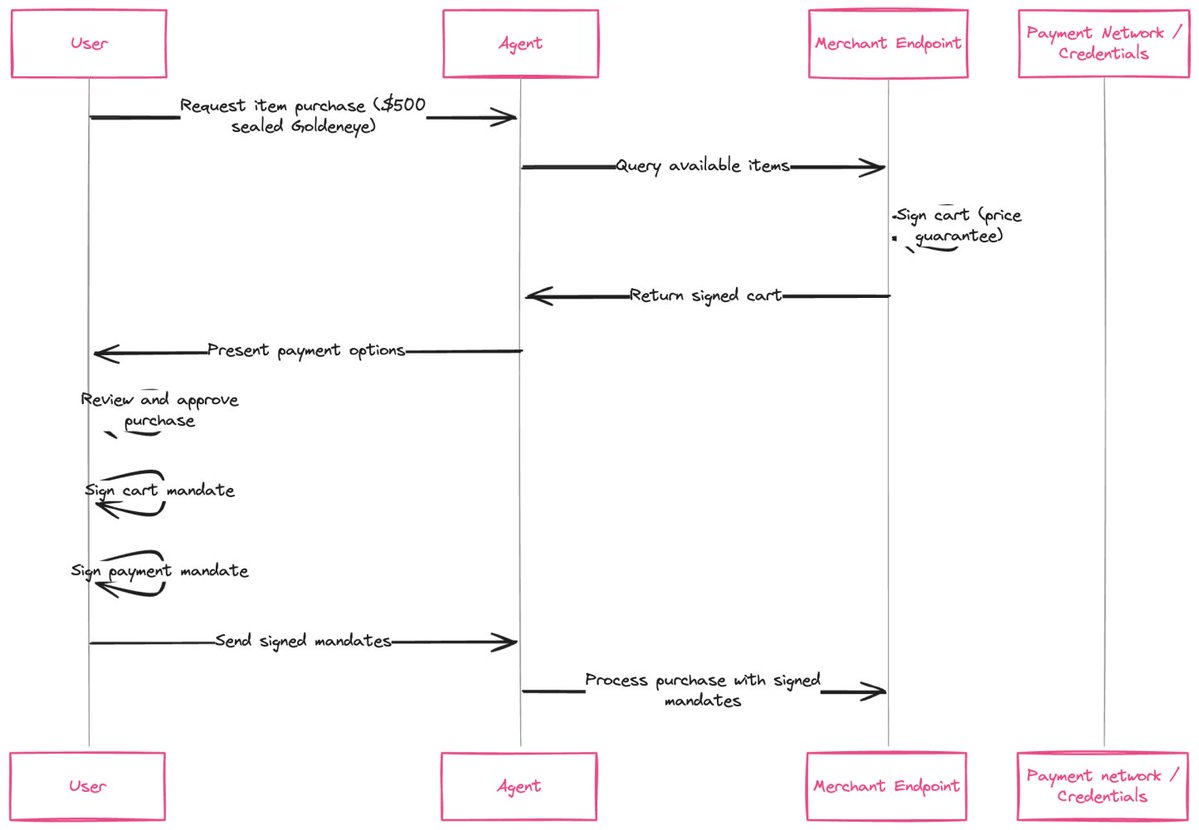
AP2 defines three VDC types, each serving a specific function in the transaction lifecycle:
- Intent Mandate: Captures the conditions under which an agent can act. For autonomous scenarios ("buy concert tickets when they go on sale under $200"), this provides the authorization boundary. The agent proves it operated within constraints.
- Cart Mandate: Records explicit approval for a specific transaction. Includes exact items, prices, merchant details. This creates durable, non-repudiable records of what the user authorized. The signature binds the authorization to specific cart contents.
- Payment Mandate: Signals to payment networks and issuers that an agent was involved. Includes user presence indicators (human-present vs human-not-present) to help risk assessment systems differentiate agent transactions from traditional flows.
These mandates connect through cryptographic references. An Intent Mandate links to its resulting Cart Mandate. The Cart Mandate links to its Payment Mandate. This chain provides the complete context needed for dispute resolution.
Role-Based Architecture
AP2 separates responsibilities across four distinct roles:
Shopping Agent: Discovers products, builds carts, coordinates with other agents. Never has access to raw payment credentials.
Merchant Agent: Confirms product availability, signs cart commitments, initiates settlement.
Credentials Provider: Manages payment methods in secure isolation. Provides tokenized credentials to the shopping agent only after cart approval.
Payment Processor: Handles network authorization and settlement.
This separation keeps sensitive data isolated while maintaining the flexibility agents need to coordinate across multiple services.
Gasless Execution as Infrastructure
Agent transactions create an economic problem that most blockchains haven't solved. When an agent makes micropayments for API access, data queries, or service calls, gas fees can exceed the underlying transaction value.
MultiversX's Relayed v3 transactions handle this at the protocol level rather than via subsidies or middleware. A relayer covers gas costs while the agent pays only for the service itself. This protocol functionality works for any transaction type.
Scaling Agent Coordination Requires Fast Finality
AP2 workflows involve multiple steps: intent capture, product discovery, cart construction, authorization, settlement. On chains with 6-12 second block times, this creates latency that breaks the conversational flow.
Supernova's design targeting 600ms block time (with finality under 300ms in production configurations) changes the latency constraints. Multi-step agent workflows complete in under two seconds total. This keeps interactions within conversational latency bounds rather than introducing waiting periods.
This performance envelope matters for agent coordination. When Agent A needs to purchase a service from Agent B, which requires data from Agent C, the cumulative latency determines whether the interaction feels responsive or becomes a UX problem.
The Complete Stack
MultiversX now implements the full layer of emerging agent commerce standards:
MCP (Model Context Protocol): How agents access tools and contextual data. This is the foundation layer that connects agents to capabilities.
A2A (Agent2Agent): How agents communicate and coordinate with each other. Defines the messaging protocol for agent-to-agent interaction.
UCP (Universal Commerce Protocol): Google's standard for the full shopping journey from discovery through post-purchase. Broader scope than just checkout.
ACP (Agentic Commerce Protocol): OpenAI and Stripe's checkout-focused standard. Lighter weight, optimized for purchase execution.
x402: The HTTP-based stablecoin payment rail. Handles actual settlement for crypto transactions through HTTP 402 status codes.
AP2: The authorization and accountability framework. Provides the mandate system and audit trails that make agent transactions trustworthy.
AP2 handles authorization through mandates. x402 provides settlement for crypto payments. ACP and UCP provide merchant integration patterns. MCP and A2A provide the agent coordination layer.
What Developers Can Build
The combination of AP2 authorization with MultiversX's gasless execution and sub-second finality enables specific patterns:
Autonomous service marketplaces: Agent A discovers Agent B's API through an AP2-compatible feed, constructs a Cart Mandate specifying the service parameters, executes payment via x402, receives the service response. The entire flow is programmatic with cryptographic accountability.
Conditional automation: User signs an Intent Mandate with constraints ("maintain my portfolio allocation, spend up to $500/day rebalancing"). The agent executes trades when conditions trigger, proving each action fell within authorized parameters. Relayed v3 keeps the economics viable for small adjustments.
Multi-party workflows: Agent orchestrates a transaction requiring three different services. Constructs separate mandates for each, coordinates parallel execution, aggregates results. Sub-second finality means the workflow completes fast enough to feel atomic rather than sequential.
Research agents with paid data sources: Agent needs to query multiple paid APIs to complete a research task. Uses x402 for micropayments to each data provider, uses AP2 mandates to prove user authorized the total spend. Relayed v3 means the agent doesn't burn gas on each individual query.
Implementation Details
The key integration points:
Transaction construction: AP2 mandates get serialized into MultiversX transaction data fields. The mandate verification happens in the execution flow.
Relayed transaction wrapping: When gasless execution is needed, the AP2 transaction wraps inside a Relayed v3 structure automatically.
Signature verification: MultiversX's native signature schemes work directly with AP2's credential verification without additional adapters.
Settlement coordination: x402 payment confirmations link to AP2 Payment Mandates through transaction references, creating the complete audit trail.
MultiversX and the Emerging Agent Economy
Several blockchains are implementing agent commerce capabilities. MultiversX's advantage comes from architectural decisions made before agent commerce became a focus:
Protocol-level gasless transactions: Relayed v3 isn't an add-on. It's core functionality that works across all transaction types.
Performance roadmap alignment: Supernova delivers the finality profile agent workflows require.
Standards adoption: By implementing MCP, UCP, ACP, x402, and AP2, MultiversX positions as infrastructure that interoperates with the entire agent ecosystem rather than a competing platform.
The combination matters more than individual features. AP2 provides authorization. Relayed v3 solves the economics. Supernova provides the speed. The standards ensure interoperability.
This is production infrastructure intended for real agent-driven workflows across the emerging agent commerce ecosystem.
MultiversX is ready to serve the new industry of agent-driven commerce at scale, TODAY.
Resources
MultiversX's AP2 implementation is open source:
- AP2 integration: github.com/sasurobert/AP2
- x402 extension: github.com/sasurobert/a2a-x402
- Official AP2 specification: ap2-protocol.org

Beniamin Mincu, Co-founder of MultiversX, is a distinguished tech visionary and one of Europe’s early blockchain pioneers.