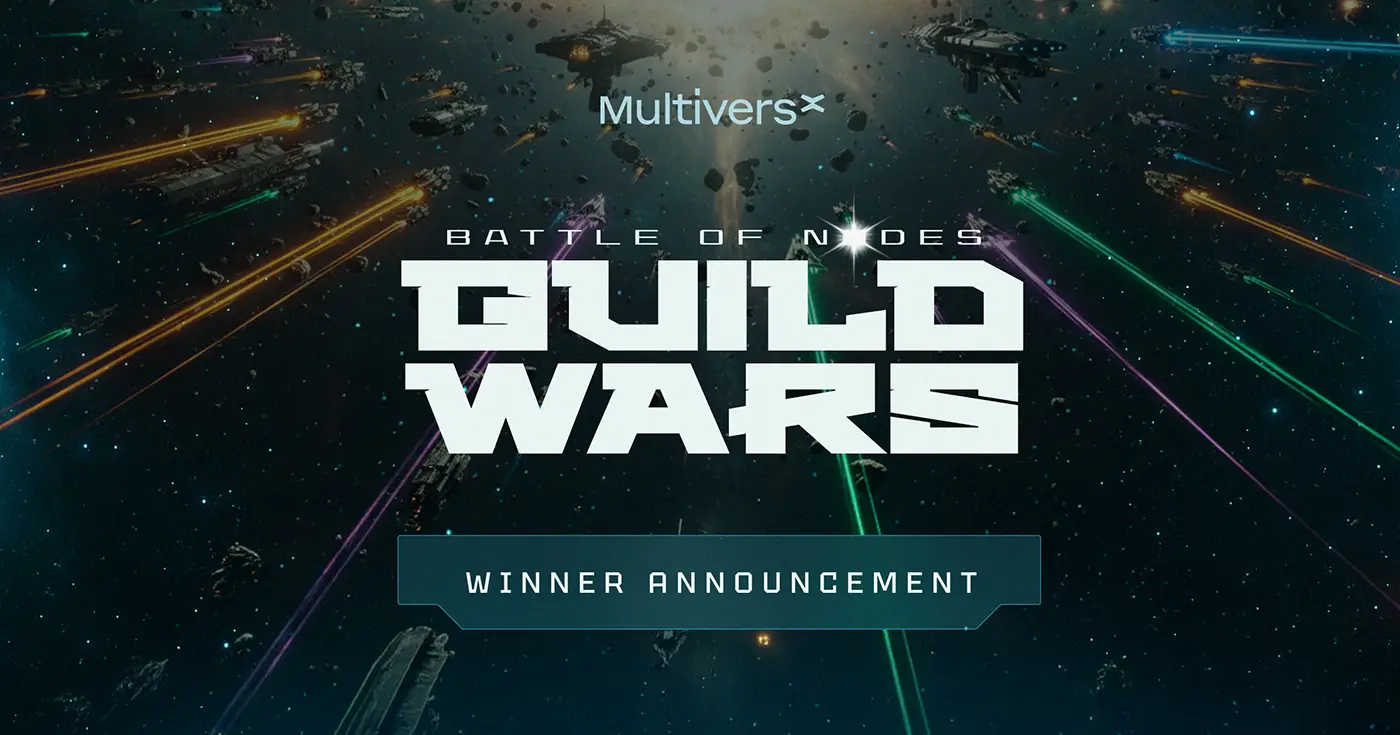
Guild Wars Winners Announced
Guild Wars: The Winners Are In
When we designed Guild Wars, the goal was straightforward: let motivated teams loose on the most significant upgrade MultiversX has ever shipped, give them real incentives to push it to its limits, and see what breaks.
They delivered.
Over five challenges and several weeks of competition, guilds hammered the Supernova network with everything they had — sustained throughput bursts, smart contract deployments, cross-shard coordination under pressure, and autonomous onchain agents.
Ahead of one challenge, teams generating preparation runs overnight produced roughly 100 million transactions in a matter of hours. That spike surfaced a known edge case in transaction handling, triggered a network reset via hard fork, and fed directly into several adjustments the engineering team made to strengthen Supernova before mainnet launch. This is exactly what the competition was designed to do — and it worked.
Over the course of the competition, Guild Wars one of the single largest sources of real load during Battle of Nodes and contributed to over 890 million transactions (at the time of writing) on the battle network
The Five Battles
Transaction Sprint opened the competition with a simple brief: spend a fixed EGLD budget, execute as many transactions as possible. Supernova Surge ran the same challenge again — same rules, same pressure — but now on an activated Supernova network running at 600ms block times instead of 6 seconds.
Crossover targeted one of MultiversX's defining architectural features. Guilds competed to generate the highest volume of cross-shard transfers, stress-testing inter-shard coordination at a scale that internal QA rarely reaches.
Contract Storm dialed up the complexity. Teams raced to fire off as many smart contract calls as possible within a gas budget — the first serious battle test for the DEX contracts deployed on the upgraded network.
Agent Arena closed things out with the most forward-looking brief of the series — deploy autonomous bots and let them run sustained, decision-driven onchain activity. A small glimpse into a future where most productive activity on the internet will be driven by similar entities.
The Standings
RosettaStake, led by Ben, combined deep validator experience with the technical precision needed to stay consistent across all five challenges and claimed first place. DinoVox, with Kevin at the helm, edged into second. Disruptive Dots, led by Daniel, came into their own in the final rounds and finished third.
But honestly? The result that stood out most was not on the leaderboard.
Watching guilds share tooling mid-challenge, cheer each other on in the Telegram, debug together under pressure, and celebrate rivals' wins reminded us why we wanted to build this competition in the first place. MultiversX has always had a technically sharp, deeply committed builder community — Guild Wars gave that community a stage, and they showed up.

Supernova is heading to mainnet. It's faster, more capable, and more battle-hardened than it would have been without the hundreds of millions of transactions and smart contract calls, the edge cases, the hard fork, and the guilds who stayed up late making all of it happen. That's not a small thing.
To everyone who competed: thank you. We're already thinking about what comes next.